Showing posts with label 1999. Show all posts

Saturday, May 14, 2011

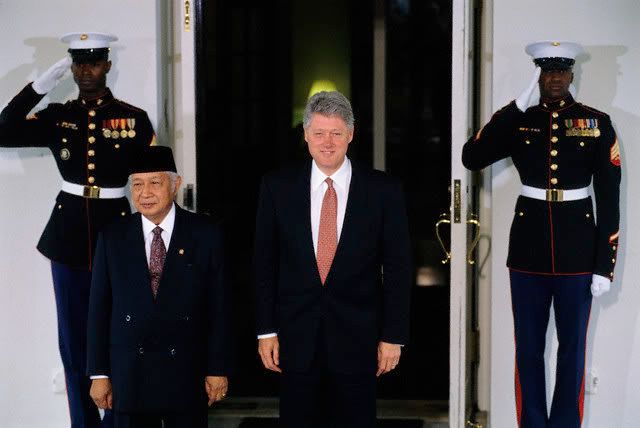
1999: The Bogus Chinese Spy Scandal

This particular scandal was just one of many that the GOP noise machine has summoned up and amplified through its Faux News and hate radio conduits over the years; by now they have it down to a science.

It's not that I don't think the Chinese were/are spying on us - that's self-evident. But what's interesting is what nobody seemed to suspect at the time: far from mollycoddling the Chinese, Clinton may have actually bombed their embassy on purpose during the Kosovo War.

Okay, plenty of people suspected that, but now we have some informed speculation for the reason. The Serbs had managed to shoot down a Stealth bomber, and the Chinese embassy had parts of the wreckage on hand for analysis. Now that the Chinese have stealth technology of their own, it looks in retrospect like the unusual bombing run that took out their embassy was an unsuccessful attempt to prevent such a development.


A couple issues ago I promised I would say something about the "bogus Chinese spy scandal." It's not that I think the Clinton Administration is incapable of selling off policy to the highest bidder (just like its illustrious predecessors). It's just that our China policy has always been remarkably bipartisan: the purchasing power of 1.2 billion Chinese has always been far more important to us than their human rights.

Sunday, April 24, 2011

1999: The Impeachment of Bill Clinton

As this issue goes to press, the Senate seems to have come to the conclusion that it's time to come to a conclusion. With the lopsided vote against calling live witnesses, the stage is now set for the President's impeachment trial to come to an end on Friday, February 12, as scheduled. Of course, this slow-motion train wreck has reversed itself so many times that it's not really safe to make any predictions until all the Congresscritters have voted and left for their vacations. But, God willing, it'll all be over soon.

Friday, April 8, 2011

1999: The No Conspiracy Blues

This is the third in a series of three annual April columns about the MLK assassination that ran in the Tucson Comic News in 1997, 1998, and 1999:

To virtually nobody's surprise, the US Department of Justice announced last week that there was no conspiracy in the death of the late Reverend Doctor Martin Luther King Junior, who is honored with a national holiday, even here in Arizona. At least, that was the gist of the story as reported by those news outlets that bothered to cover it at all. A Justice Department spokesman hastened to point out that they didn't find that there was absolutely no conspiracy at all. It’s just that they weren't able to find one after investigating for the last eighteen months.

It turns out that Janet Reno had asked her investigators to look into only two allegations. One, whether a Memphis barman named Lloyd Jowers had been telling the truth when he confessed to being a part of a conspiracy to assassinate King, which included members of tile Mafia and the federal government And two, whether a former FBI man named Donald Wilson had been telling the truth when he claimed to have recovered documents from the car of accused lone nut assassin James Earl Ray, which tended to corroborate Ray’s version of the events.

Thursday, April 7, 2011

1999: The Great Birkby

My hate mail was never of quite the caliber that Markos Moulitsas Zuniga receives, as we do operate on different planes. But the Birkby letters were some of my all-time favorites. For quite some time after this exchange, printed in issue #69 of the Tucson Comic News, my friends and I would use the world "birkby" as a synonym for clueless. So Mr. Birkby, if you're still out there, you've achieved semi-immortality.

Dear Mr. Zep: I know from my own political research that most of the organizations in the "peace" calendar are pro-Communist (or are front groups). What is peaceful about Communism? More people have been killed under Communism than any other form of government in history. (Yes, this includes Hitler). Some of us know the truth, sir. Whether you realize it or not, you have blood on your hands by giving those groups publicity. And I'm guessing that when you finally realize it, you won't care. J.M. Birkby

Dear Mr. Birk:

Let me get this straight. Because I publish meeting times for groups like Tucson Organic Gardeners, the local food co-op and the Cosmic Peace Healing Circle, I'm responsible the the deaths of millions under Stalin?

Your letter reminded me of an old Russian joke: Under capitalism, man exploits man. But under communism, it's just the opposite.

Friday, April 1, 2011

1999: More Wonderful Hate Mail

From Tucson Comic News #76. I never get any hate mail these days, whereas I used to get some great stuff. Maybe as I return to a more public profile after years of hunkering down with my young kids, I'll attract some entertaining correspondents. After all, it's not like there's any shortage of wingnuts these days.

In any case, this exchange is kind of long, but does raise a few issues relevant to our current situation. The useful links are down in my second reply:


I saw your editorial in the News for Nov. 1999 and realized that you don't really understand what is happening in our society. I might say that many technical journal editors are in the same boat, you think that if someone only comes up with a good idea we can go back to the 3 class society that existed for about 100 years.

The two class society, Upper and Lower, is far older and longer lasting---that is the way we are going and it is happening in every developed country on the planet. I could discuss the reasons for this, it is not a right wing plot, but I don't think you would be interested.

Stuart A. Hoenig


Wednesday, March 23, 2011

1999: "Peace" in Kosovo

The persistent belief that Kosovo was a "good war" seems to have informed a lot of thinking about the possibility of intervening in Libya. My good friend David Gibbs has addressed this paradigm, in book-length, article-length and op-ed formats. I think the entire episode is worth revisiting in detail, with an eye to challenging one's own assumptions, wherever one stood at the time.

As this issue hits the streets, NATO troops are hitting the ground in Kosovo, having finally ended their massive bombardment of Yugoslavia. The President and much of the corporate media will no doubt be portraying this as a wonderful victory for our side. But it comes at a terrible price, and as with our much longer war against Vietnam, the terms agreed to at the end are not much different from what we could have got in the first place.

1999: Kosovo (During)

From May of 1999 comes further ranting on the topic of the Kosovo War. As a "liberal" intervention, it was subject to a great deal of support from people who normally oppose that sort of thing, and vice versa – kind of like right now. It also engendered some fairly bitter arguments, certainly on the former side. Certainly as Mark Twain said (whoops, apocryphal), history does not repeat itself – but sometimes it rhymes:

Now, last month I allowed as how I was somewhat suspicious of Uncle Sam's professed motives for his latest intervention. What I know now that I didn't know then is that the Rambouillet accords were a complete farce. The text was kept secret until well after the bombing began, and now we can see why. Rambouillet wasn't about negotiation; it was an ultimatum: sign here or we bomb you. But the document that we were asking Yugoslavia to sign would have been rejected by any sovereign nation on earth. It called for NATO troops to occupy not only Kosovo but all of Yugoslavia. It gave NATO the right to use all Yugoslavian roads, bridges, airports and seaports free of charge, not to mention the entire electromagnetic spectrum. And it stipulated that Kosovo would convert to a "free-market" economy, under the supervision of the NATO commander.

1999: Kosovo Quagmire

In preparation to comment on our five-day-old war in Libya, let me first issue a couple of re-runs pertaining to the Kosovo intervention, the one to which our current police action is most often compared. First, from April of 1999, the prelude. As usual, many of my direst predictions failed to materialize. But some of these observations appear pertinent to the current situation:

Pardon me if I'm just a little bit suspicious of our professed motives for yet another in a series of US military interventions. Seems like every time we roll out the warplanes these days, we claim to be doing it for humanitarian reasons. My absolute guideline in these situations is that wars are never fought for altruistic reasons; never have been, never will be. So far I haven't seen anything to make me change my mind about that.

The corollary to that is that if you're going to go around waging wars for non-altruistic reasons, whatever they be, it is first necessary to propagandize your population into supporting (or at least not actively opposing) your efforts. The second most efficacious, time-tested method of doing that is to to try and convince said population that you are going to war for altruistic reasons. The best method, of course, is to convince them that you're going to war out of self-defense.

Saturday, March 5, 2011

1996: World Hunger & RESULTS

This organization is still active and still doing valuable work - through Dr. Yunus (now a Nobel laureate) is being persecuted in Bangladesh. You can donate to RESULTS at their website or Facebook page, and it remains one of the best ways to leverage your charitable contributions.

I want to tell you about something that has given me more hope than anything I've heard of in a long time. The work I've been doing for the last decade or so has kept me well informed of the many reasons for cynicism and despair, so it takes a lot to get me this hopeful.

There's an organization called RESULTS, which is an international citizen's lobby, dedicated to creating the political will to eradicate hunger and poverty. And these people are living up to their name: they save the lives of over four million children a year.

RESULTS has had spectacular success in combatting deaths from easily preventable diseases, like measles, diarrhea, whooping cough, tetanus and pneumonia. These five account for more than half of the 35,000 children who die every day accross the planet. The annual cost of immunizing them is something like ten bucks. Planetwide, it works out to one day's worth of military spending by the governments of the world.

1999: Rock en Español, et cetera

12 years later, the Music Club label is still in business. Mr. Cooder and Mr. Ribot both have a number of other fine releases behind them. There are upcoming Tucson appearances from both Ozomatli and Los Lobos – and though the second Latin Playboys album turned out to be the last one, so far, they are promising new music at some indeterminate point in the future.

But the whereabouts of Bloque are a bit of a mystery. They haven't released an album since the Luaka Bop disc mentioned below. There's a Spanish band by the same name that apparently broke up around the same time as the Columbian band (AKA Bloque de Busqueda) got together, and both bands have a bass player named Luis Pastor, but no other personnel in common. Anybody have any clues on this?


The UK-based label Music Club is a reissues label specializing in world, reggae, blues, jazz and roots music. They have reissued music from the likes of Charles Mingus, The Troggs, Astor Piazzolla, the Sex Pistols and Patsy Cline, along with dozens of compilations. They expanded to the US market in 1996 and currently offer over 100 titles, most of them priced around ten bucks.

Anyone enjoying the current resurgence of swing music would be well advised to go back to the source, and Music Club’s Swing Party: House Rockin’ Swing and Jump Jive Boogie would be a good place to start. The 15 tracks, all recorded in the late 40s and early 50s, feature such pre-rock masters as Charles Brown, Johnny Otis, Lowell Fulson and Jimmy Witherspoon. Reggae fans will enjoy Souled On Reggae, with old soul hits like "Everybody Plays the Fool" and "If Loving You is Wrong" redone by reggae bands, including Toots and the Maytals. And the current spurt of interest in Cuban music, sparked in part by Ry Cooder’s ethnomusicological investigations, is represented in the anthology Cuba Eterno. These tracks also date to the 40s and 50s, and feature both big bands and small acoustic combos.

Anyone who hasn’t checked out the aforementioned effort by Mr. Cooder, Buena Vista Social Club (Nonesuch, 1997), owes it to themselves to do so. Cooder sought out the cream of contemporary Cuban musicians, who have been operating in something of a vacuum, free of influence by record company weasels, for 40 years now. The results are so lush and romantic that if it doesn’t get your sweetheart in the mood, send me your copy so I can use it after I wear mine out (my CD, not my sweetheart).

Another excursion into Cuban music comes from the eccentric guitarist Marc Ribot, formerly a sideman for Tom Waits and Elvis Costello. His 1998 Atlantic release Marc Ribot y los Cubanos Postizos (Prosthetic Cubans) is a bit edgier than Cooder’s effort, but equally lovely. Ribot relies on electric guitars for most tracks, but lovingly recreates the spirit of Cuban music without losing his own esoteric charms. In some of its edgier moments, it reminds me a bit of the Latin Playboys, albeit nearly 100% instrumental.

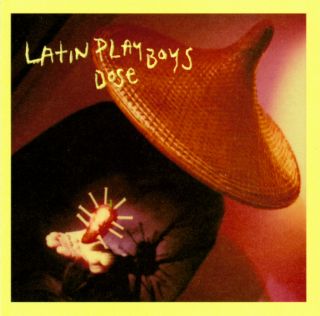
The Latin Playboys are basically half of Los Lobos—David Hidalgo and Louis Perez—combined with producer guy Mitchell Froom and drummer Tchad Blake. The Playboys debuted in 1994 as an experimental side project from Los Lobos. Now that one of the best bands in the country is between record contracts, the second Playboys album, Dose (Atlantic, 1999), is the main event. Slyly acknowledging their lysergic influences, they live up to their name with music that’s as playful as it is compelling. Tasteful dollops of feedback, dissonance and distortion punctuate their explorations of traditional Mexican music and the blues.

And speaking of traditional Mexican music, it’s still in evidence on the eponymous debut by another band from East LA, Ozomatli (Almo Sounds, 1998). This ten-piece ensemble mixes the old with the new; it should appeal to both Lobos and Santana fans, even though the new includes (on a few tracks) a turntable scratcher and a rap vocalist named Chali 2na. The hip-hop elements are blended seamlessly with the horns and guitars, so even rap-phobic boomers are invited to the party.

Which brings us to a bunch of party animals from Columbia known as Bloque. Their first US release, also eponymously titled, is midwived by David Byrne’s Luaka Bop label, which has brought plenty of splendid world music to these shores. Bloque is one of the hottest bands in the burgeoning rock en español movement, which has been goosed to no small extent by the Spanish-language MTV channels beamed all over the hemisphere. Bloque present more or less traditional Columbian sounds spiced with ironic and alienated lyrics (translated for us gringos) and Zepplinesque guitar pyrotechnics from one Ernesto Ocampo. He and the other musicians are clearly fans of American music, but most Americans have never heard of them. Now that you have, go get you some.

Saturday, February 26, 2011

1999: My Dinner with Frank Black

,Frank Black has since reunited with the Pixies, and continues his prolific solo career. Roy Zimmerman gigged here in Tucson last month, and his upcoming appearances are posted here. The two of them shared a stage again last August at the Great American Music Hall in SF.


Being in LA again reminded me of everything I love and hate about it. Flying in, you can take in the awful vastness of it, and look down on the morning overcast that's both smog and fog, and you're never sure how much of which. Down on the ground, when you're on the coast, you know it's mostly fog. Conversely, when you're in Pasadena or Pomona and you can barely make out the mountains a few miles away, you get that sickening certainty about what's going into your lungs. All the clean air regulations imposed since I last lived there, in 1978, haven't appreciably improved the atmosphere - there are just that many more cars to make up the difference.

But on that other hand is the great confluence of culture that comes from throwing millions of people together. The variety of options available to me on the radio dial, in the movie theaters, and in the music clubs was overwhelming. And driving through the gray vastness of it all, you could catch glimpses of truly delightful architecture, as well as more intriguing restaurants than you could sample in a year. Not to mention all the great museums I didn't have time for.

I'd placed myself back in LA for two reasons. One was to visit my grandmother, who, at 88, is somewhere in the slow-moving checkout line in the supermarket of life. And the other was to sample one of those many cultural options: my old high school buddy Roy Zimmerman was holding forth that evening at McCabe's Guitar Shop with one of my musical idols, Frank Black (AKA Black Francis of the Pixies, AKA Charles Thompson).

Search Amazon.com for frank black
Search Amazon.com for roy zimmerman

Thursday, February 10, 2011

1999: Pondering Pavement

Pavement were, hands down, one of my favorite bands ever. They broke up shortly after this review was written. However, they reunited last year and toured the world, selling out venues wherever they landed. As I understand it, though, they have no current plans to record together, or to stay reunited. But you never know...


In a recent interview with the boys from Pavement, none other than Moon Unit Zappa exulted at the lack of commercial potential exhibited on their extraordinary fifth album, Terror Twilight. And she’s right: you won’t have to go to a baseball stadium to hear them play anytime soon. In fact, you can catch one of the finest rock bands of the 90s right here in Tucson on October 5th at our little old Rialto Theatre downtown.

Actually, given the mediocre sameness of most of what gets played on commercial radio these days, it’s a great compliment that radio seems to have given up on Pavement, and vice versa. While too many of their contemporaries sing of strangled masculine angst, Pavement makes idiosyncratic grooves on subjects like water politics, trench warfare, architecture and, yes, the mediocre sameness of contemporary rockers. They blend Stephen Malkmus’ oblique lyrics and improbable rhymes (my favorite: “men in dashikis/and their leftist weeklies”) with a cheerful eclecticism that embraces free jazz and bluegrass as well as the whole of rock history.

Friday, February 4, 2011

1999: Save Social Security

Just listened to the Diane Rehm show on my car radio, and the consensus view was that our current budget problems are best dealt with by modifying a social insurance program that is solvent for another 30 years or so. It's infuriating the way Beltway pundits lump Social Security in with "the entitlements problem" and generally ignore the huge cost savings to be realized in Medicare reform. Specifically, a public option, as in "Medicare for all" would save huge amounts of money. But either way, we have an aging population, and we will need more revenue to pay for it. Obsessing on benefit cuts, while the income cap on payroll taxes exempts the wealthy from paying the same as everyone else, is the height of myopia. Here's the view from twelve years ago:

Even though it's just a few weeks, doesn't it seem like the whole impeachment trial was a long, long time ago? One of the persistent rumors in Washington was that the big money guys were urging the GOP to acquit the President so that he'd be around to help "reform" Social Security.
Last week the President stopped off here in Tucson to explain just how he intends to do that. The good news is, it could have been a lot worse. Clinton has been flirting with various "privatization" plans, but had to back way off in the face of opposition from labor unions and the AARP. The bad news is, with the GOP still running Congress and the Great Compromiser back in the saddle, the final product could still end up pretty bad.

We have been the targets of several years of unrelenting propaganda from right-wing think tanks aimed at convincing us that the Social Security system is in crisis. These efforts have been largely successful, especially amongst many young people, who are convinced that there will be no money left when it's time for them to retire. This is absolutely not true.

Thursday, February 3, 2011

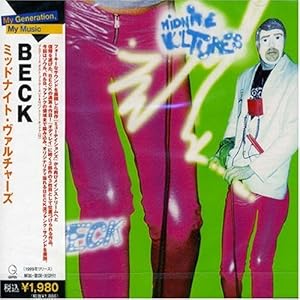
1999: Midnight Vultures

In retrospect, the Prince album that is most often compared to Beck's 1999 opus is not Dirty Mind but Around the World in a Day - as an example of artistic hubris following a commercial breakthrough. No matter. I still think Midnight Vultures is underrated (though I'd tip my hat to Guero as Mr. Hansen's second greatest work). What Beck's career has shown is that he's not so much interested in "topping himself" as exploring as many facets of himself as he can, a la Bowie. Oh, and, your videos are a mouse click away.

So you wouldn't have thought that Beck Hansen could top himself. I didn't. Apparently he didn't either. And definitely the two leading journals of rock criticism, Rolling Stone and Spin, dismissed the possibility when they went to print with their respective "best of the 90s" issues several months before Beck slipped in his latest, Midnight Vultures, just ahead of the millennial (sic) deadline. And if, ultimately, he couldn't top the sublime Odelay, he sure had a lot of fun trying - and it shows.

The funny thing is, he didn't even think Odelay was all that great. "At the time," he admits, "I thought the album was kind of behind." (Similarly, when Radiohead emerged from the studio with their masterpiece OK Computer, they had no idea who could possibly appreciate it.) But Odelay turned out to be ahead - way ahead. To be sure, he benefitted from low expectations in a way that he can't anymore. After his improbable MTV hit "Loser" blended folk with hip-hop and an indelible slide riff, he could easily have been dismissed as a one-hit wonder. And indeed, his haphazard stage shows of the time wouldn't have disabused anyone of the notion. While Beck had been performing since he was a small child, he was the first to admit that he had no idea how to "mach schau," as the clubowners on the Reeperbahn advised the young Beatles. So mostly he just hung out on stage and jammed with his buddies.

Saturday, January 29, 2011

1999: McGarrigles and Wainwrights

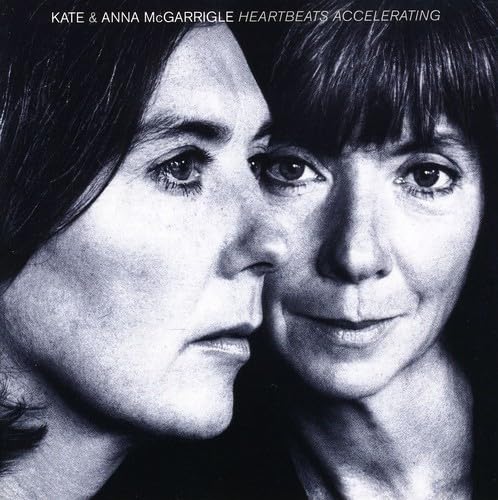
Sadly, the great Kate passed away last year at the age of 63. Their last disc together was the delightful McGarrigle Christmas Hour. Since this review was written, Kate's daughter Martha Wainwright has also joined the family business, with three distinguished releases to her name so far. Meanwhile, Rufus and Loudon continue to add their respective oeuvres. Anna McGarrigle has not announced any new projects, but the official Kate and Anna website contains heartfelt tributes to her late sister, and links to a new rarities disc. You can sample videos of the sisters over here.

One of the overlooked gems of 1998 was a new disc from the good old McGarrigle sisters, Kate and Anna. The two have been recording wonderful folk-rock albums since the early 1970s. As songwriters, their compositions have been covered by, among others, Linda Ronstadt and Emmylou Harris, both of whom appear on the new album, The McGarrigle Hour.

The Rykodisc recording is a family affair, which includes their sister Jane, Anna’s husband Dane Lanken, Kate’s ex-husband Loudon Wainwright III, and their two children Martha and Rufus Wainwright, as well as assorted other family and friends.

This delightfully homespun album has the feel of a fireside singalong, and contains works by all the principal songwriters in the family, as well as classics from Irving Berlin, Stephen Foster and Cole Porter. This old-fashioned style of songwriting is also much in evidence on the whimsical and romantic debut album by Rufus Wainwright (eponymously titled, on DreamWorks records). Rufus was recently chosen Best New Artist by critics from Rolling Stone magazine, and his album came in 10th place in the prestigious Village Voice Pazz’n’Jop critics’ poll.

Like his parents, young Wainwright harkens back to pre-rock sensibilities, but his lyrics have a biting contemporary edge to them. That bite may have come from his father’s side. It’s been said of him “He could’ve been as big as Springsteen or Dylan if he wasn’t endowed with a sense of humour.” Those interested in the elder Wainwright’s long and distinguished career are urged to check out the compilation One Man Guy: The Best of Loudon Wainwright III 1982-1986, on Music Club records. Unfortunately, this barely scratches the surface of his 30-year discography. His comprehensive website contains links to both Rufus’ and Kate & Anna’s home pages.

Tuesday, January 25, 2011

1999: Timor and Kosovo

Right in the middle of President Clinton's Kosovo War came a reminder that not all humanitarian interventions are created equally. This one appeared in the September 1999 issue of the Tucson Comic News.

Now that Indonesia has finally decided to allow UN peacekeeping forces into East Timor, we can hope that at long last, the carnage on that tragic island - the largest per capita genocide since Hitler - may finally come to an end. But those cynics among us who had their doubts about our humanitarian motivations for intervention in Yugoslavia can certainly raise an eyebrow at the comparatively milder response to Indonesia’s vastly more brutal crimes. Apologists for our terror bombing of Belgrade will protest that these are two completely different situations. And indeed they are.

For the two examples to be equal, we would first have to imagine that, instead of being elected into power, the current regime in Yugoslavia took over in a coup that was at least tacitly supported by the CIA. And that once in power, that regime proceeded to exterminate between a half million and a million of its political opponents, with the enthusiastic cheerleading of the New York Times, and working off of lists of “known subversives” provided by the US State Department.

Then imagine that Kosovo was never an historic province of Serbia, but that Yugoslavia just up and grabbed it one day - which happened to be the day after Gerald Ford and Henry Kissinger came to visit. And then let us imagine that instead of killing 2000 Kosovars, as the Serbs did last year, that they killed a hundred times that many, and that these 200,000 amounted to fully a third of the population. And suppose that this killing continued for several years, until Yugoslavia had to slow down because they were running out of supplies. Luckily, though, Jimmy Carter and Richard Holbrooke would then have sent them an emergency military aid package.

And then, let us imagine - I know this is far-fetched, but just bear with me - that our UN Ambassador at the time, the well-respected intellectual Daniel Patrick Moynihan, casually remarked about those 200,000 dead bodies: “The US wished things to turn out as they did, and worked to bring them about.”

But wait, there’s more. Imagine then that Slobodan Milosevic, with all that blood on his hands, was not indicted by an International War Crimes Tribunal, but became a respected statesman and one of the richest men in the world. In fact, imagine that instead of holding on to quaint socialist notions like state control of natural resources and worker management of factories, that Yugoslavia under Milosevic had become a playground for multinational mining, timber and oil companies.

Imagine that Bill Clinton had warmly toasted the living genocide champ as “our kind of guy.” But suppose that after supporting him for more than 30 years, we found that he had made his country such a miserable place to live that he had begun to outlive his usefulness to us. And now, you need to imagine that we simply told Slobo that it was time for him to go. And under this improbable scenario, Slobo would dutifully step down, just a couple hours after he was asked to by Madeline Albright. Then he would shuffle off into comfortable retirement with his vast fortune, but only after being allowed to hand-pick his successor. Let us call him... Mini-Milosevic.

So now. Let us then imagine that Mini-Milosevic had agreed to allow the Kosovars to vote on independence but that his paramilitary forces continued to kill, rape, loot and pillage in order to intimidate the Kosovars (and any other provinces that had any ideas about seceding) into settling instead for “autonomy” under Yugoslavia’s benevolent administration. That part isn’t too hard to imagine, now is it? But suppose that, instead of issuing ultimatums and then bombing the country for 78 days, effectively destroying the most vital civilian infrastructure, we just kind of wrung our hands and fretted that this was an internal concern for the Yugoslavians, and that Kosovo was after all still part of Serbia, and that we certainly weren’t going to send in any peacekeeping forces without their permission.

No, this is even better, because remember, back in the real world, the Yugoslavians actually did agree to UN peacekeeping forces before we started bombing, but balked at a NATO-led force occupying the whole country, rather than just Kosovo. But imagine instead that they had simply flipped off the international community and said, we can handle this ourselves. And imagine that we said, oh, okay fine, let us know if you need any help. And then of course the Yugoslavian Army would have imposed martial law on Kosovo and proceeded to help the death squads do their work.

Okay, and while you’re imagining all of this, you also need to imagine that the corporate media- you know, the Times and the Post, the networks, CNN, Newsweek and Time, and your hometown daily - all basically ignored the massive bloodbath in Kosovo until it had gone on for nearly 25 years. But then the killing machine revs up one last time and it can’t really be ignored anymore because we had just finished bombing the bejeezus out of some other little country in the name of preventing a humantarian catastrophe.

So finally we tap Mini-Milosevic on the shoulder and say, you know what old pal, this is getting a bit embarrassing. We’re forced to distance ourselves from you, and now we’ve had to temporarily suspend arms sales, and we’re under a bit of pressure to hold back economic aid. It’s, you know, getting in the way of business. And finally, to our great relief, he says oh, all right, if you insist. We’ve done all we can here, why don’t you chaps take over. And we say, thanks old boy, see you at the next summit.

But of course, you don’t need to imagine this story, because it’s the story of East Timor. And now you know why there was never any talk of bombing Jakarta. Except from the occasional smart-ass.